Denver Permaculture Design Course
Next Course Begins October 2026
Permaculture is a revolutionary design science that applies nature’s patterns to human structures.
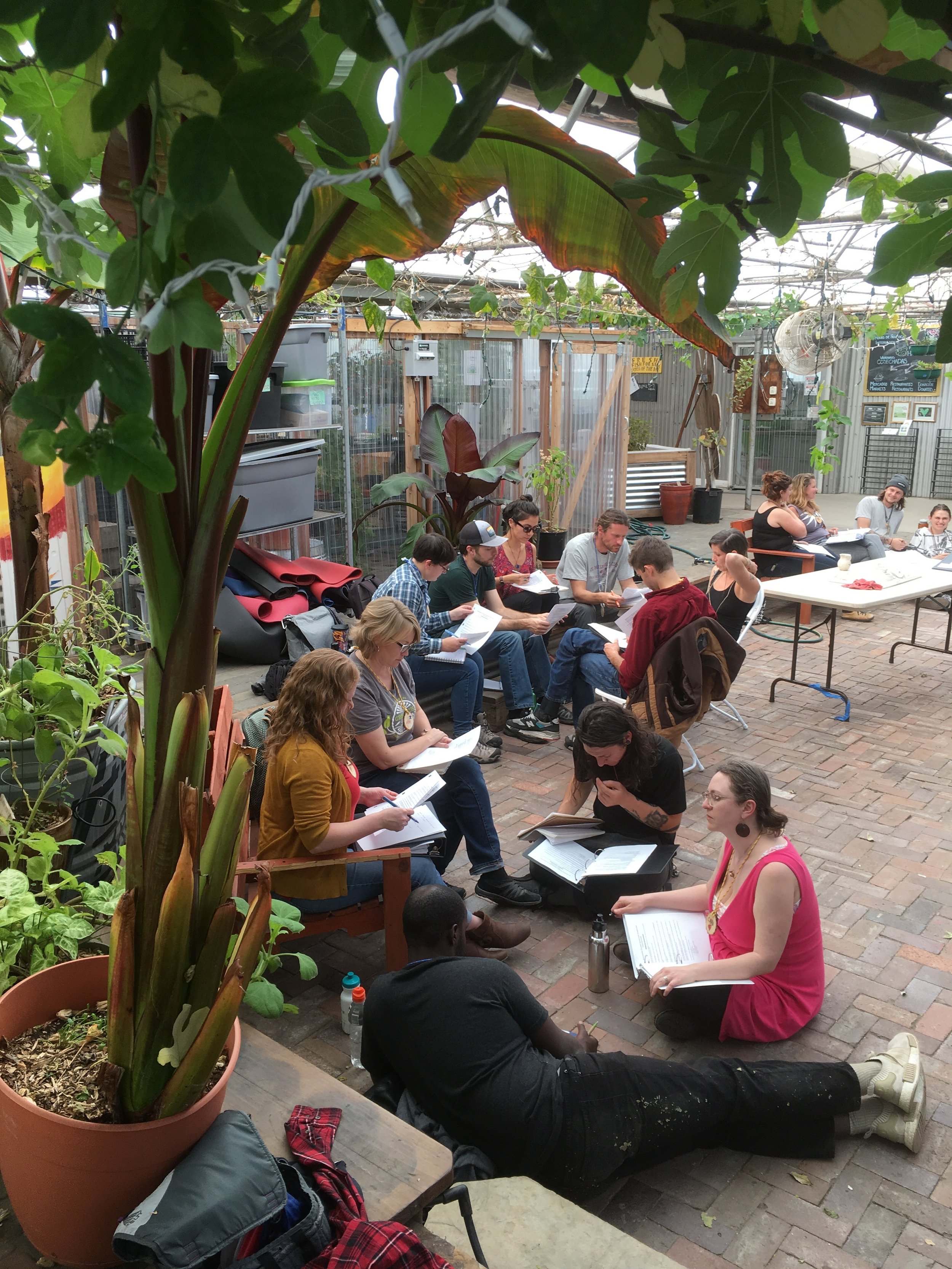
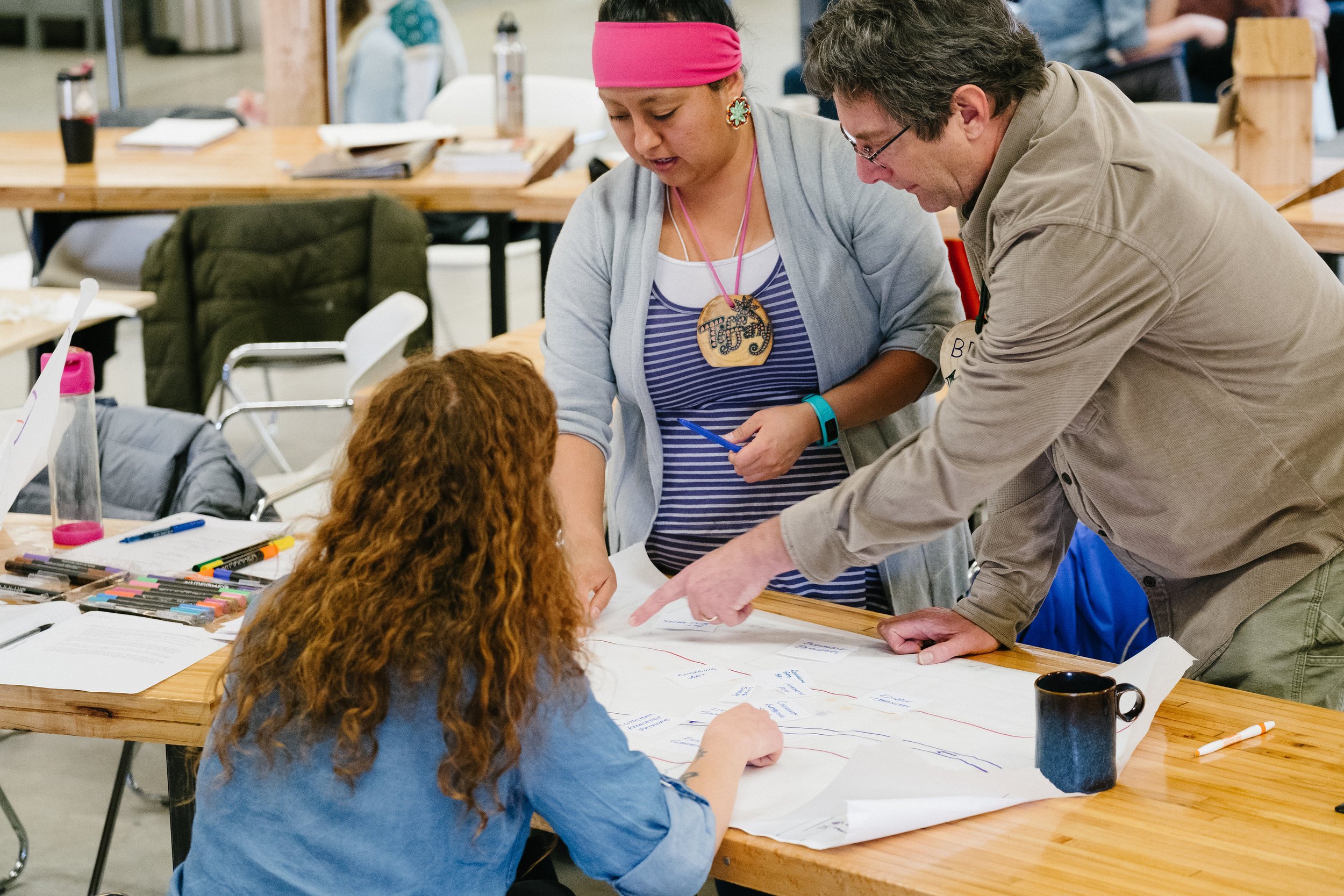
The Permaculture Design Course (PDC) has trained thousands of changemakers around the world in its theory and practice. Our 112-hour course includes the core 72-hour internationally certified curriculum as well as a number of detailed breakout sessions and regionally appropriate resources. Through an engaging mix of lecture, hands-on group activities, and real-world design projects, participants will gain a comprehensive understanding of ecological thinking and how to apply it in a variety of contexts.

The Denver PDC
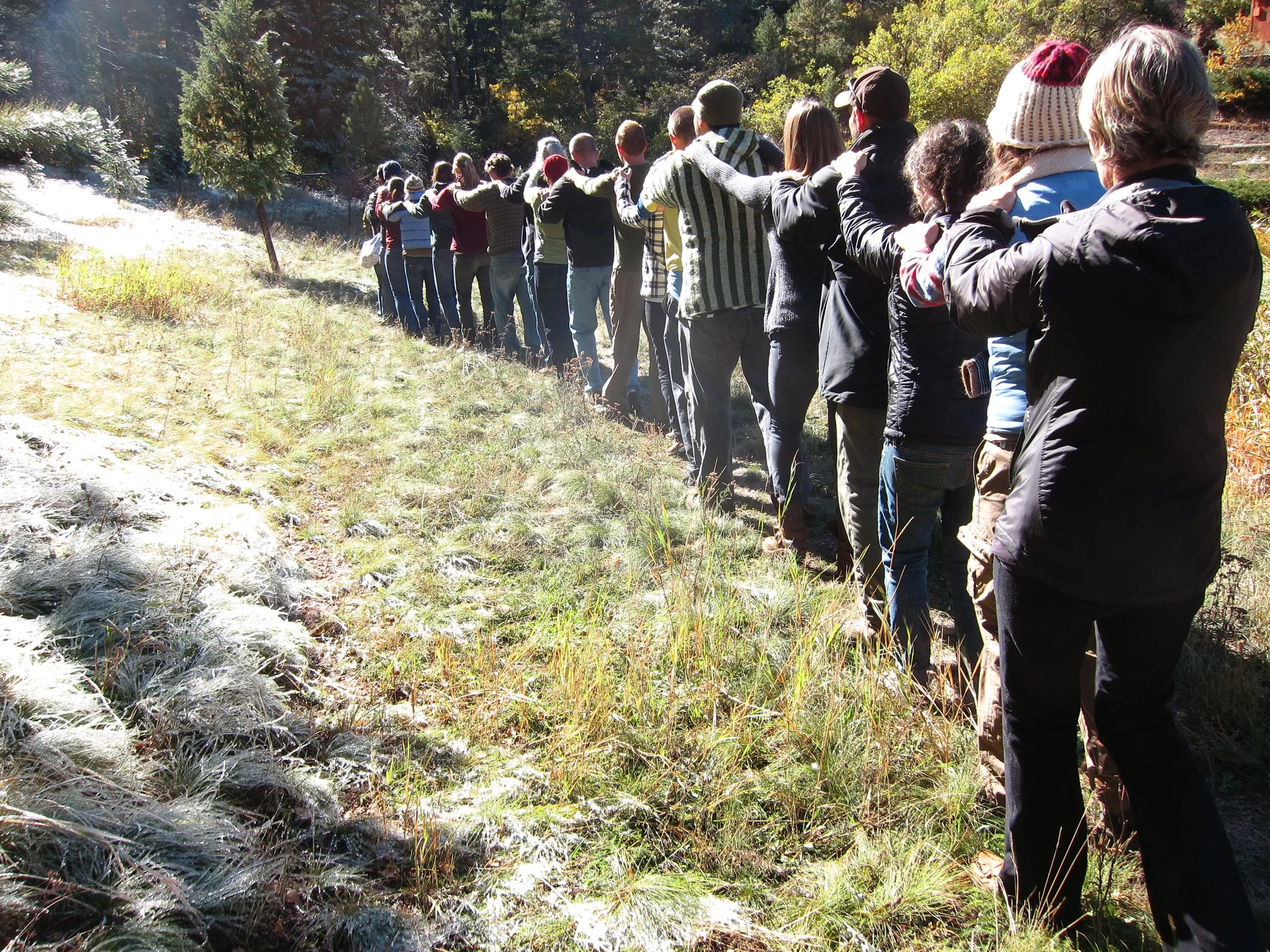
In 2026 the Denver PDC will be run as a direct program of Denver Urban Gardens to make the course bigger, more extensive, and with more opportunities for students than ever before. Students will create designs for a future DUG garden and/or food forest site, collaborating with real stakeholders throughout the process. Classes will alternate between the Posner Center in downtown Denver and a design site to be determined. The first weekend is an immersive overnight retreat at Cal-Wood Education Center in Jamestown to dive deep into permaculture together.
Dates and potential syllabus topics are to the right; in addition to our core team of facilitators, each weekend will feature one or more guest teachers from Denver’s permaculture community.
At the end of the course, students will have the opportunity to be matched with a DUG community garden or food forest, where they will be encouraged and guided to observe, interact, and create a design to help improve and develop that space—a first-ever post-course practicum component.
-
*Cohort Retreat Weekend at Cal-Wood Education Center in Jamestown!
Course overview and logistics
Context and story
Ethics and principles
Case studies
Fundamentals of ecology
Introduction to patterns
Reading the landscape
-
Permaculture design process
People and patterns
Social justice
Climate, microclimate, landform
Sector and zone analysis
Basemapping
Watersheds
Greywater and cisterns
-
Soil building strategies
Contamination and remediation
Fungi
Forests and trees
Perennial polycultures
Design strategies
-
Garden strategies
Animals in design
Design for catastrophe
People guilds and social dynamics
-
Built environment
Appropriate Technology
Waste
Greenhouses and season extension
-
Permaculture economics
Business strategies
Food preservation
Access to land
Design presentations and feedback

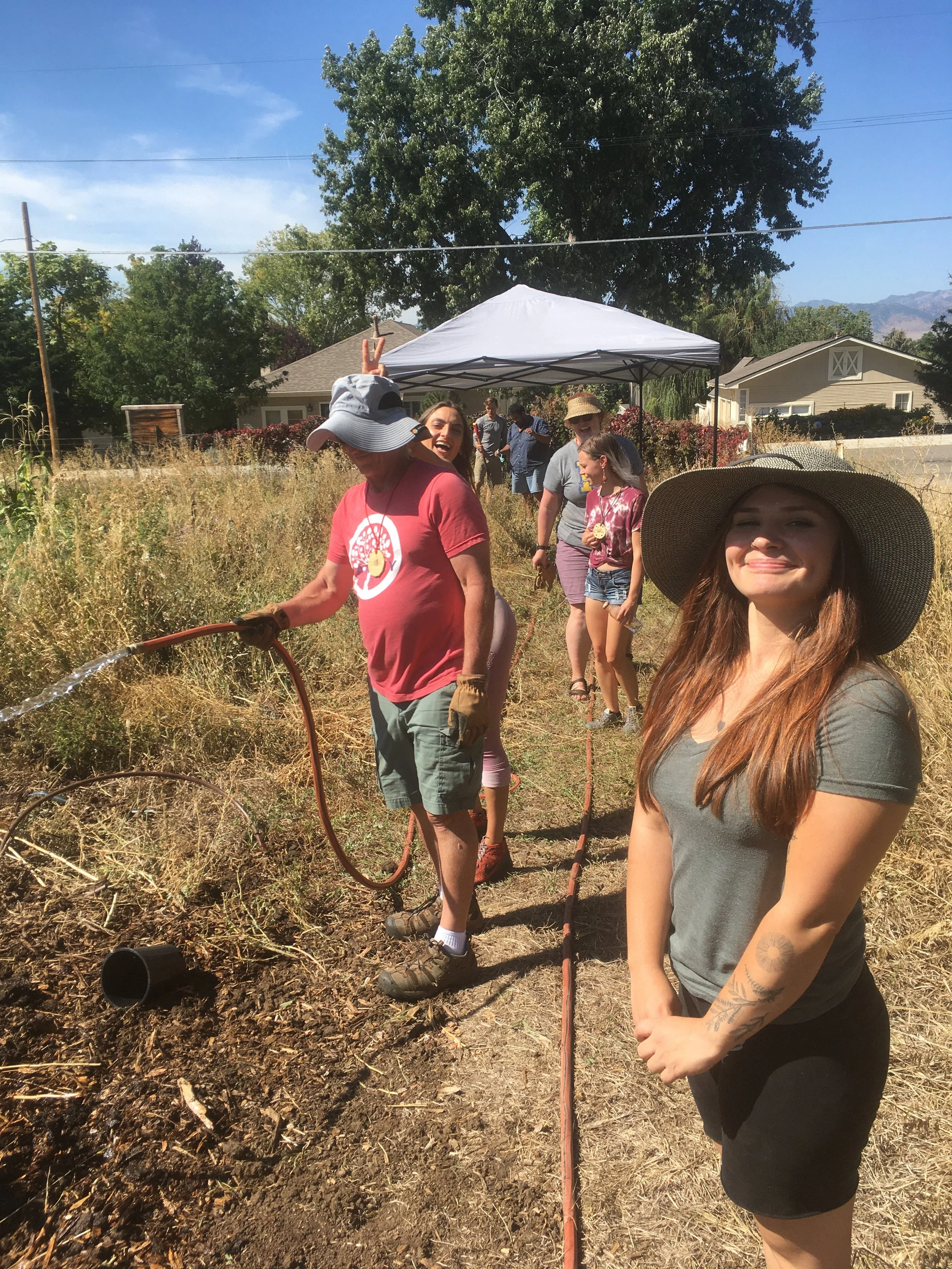
Facilitator Asia Dorsey works with students on soil health during the 2021 Denver PDC.
Frequently Asked Questions
-
The design course offers 12 core days of instruction, presenting the brilliantly successful and transformative curriculum developed by Bill Mollison and The Permaculture Institute as a certificate course. All Permaculture Design Courses cover a minimum of 72 hours of material. This course is offered as 12 days of weekend classes, supplemented by optional workshops and at-home modules for further exploration. The course is adapted to a wide variety of learning styles and is presented via hands-on projects, lecture, images, video, group discussion, individual and group exercises, and design projects. Class usually lasts from 9AM to 5PM. Weekend courses usually include readings and modest amounts of other homework, as well as occasional meetings of design project teams.
Each day of the course builds on the knowledge gained in earlier sessions in what is known as spiral learning, where we revisit some of the topics presented earlier but from a more advanced or broader perspective at each pass. This not only reinforces the subjects and makes learning easier, but it shows how each subject is related to the others. By the end of the course, this whole-systems approach will give you regenerative tools to help you redesign or improve almost any aspect of your life, from your garden and house to your livelihood, relationships, and community.
-
Formally known as the Permaculture Design Consultant’s Certificate, this document is awarded to those who attend all sessions of the design course (missed sessions can usually be made up later), and who successfully complete the design project. The certificate for our courses is in accordance with or surpassing the guidelines used by national and international certifying bodies.
The certificate gives the holder the right to use the word “permaculture” in a business or other professional practice, and signifies successful completion of the permaculture design course. It is the pre-requisite to further training in permaculture design such as the two-year diploma program offered through the Institute, teacher training courses, and other advanced permaculture trainings. Holders of the certificate join a growing community of many thousands of design-course graduates who share a common body of knowledge.
The certificate does not mean that you are a “certified” permaculture designer, as the design course covers roughly the same amount of material as two college courses, which is not enough to make you a certified practitioner, just as two courses in chemistry would not make one a certified chemist! The design course is the first step in becoming a permaculture practitioner, whether in design, education, construction, or any one of many other fields.
Note: Full attendance is required to receive the certificate. We know that life happens, so we have created a policy regarding missed classes:
● if a day of class in months 2-5 is missed, make-up assignments can be provided
● if up to two full days of the course are missed, participants can still receive a certificate after attending the equivalent portions of another PDC.
-
Design professionals can add new qualifications to their resumes and offer improved services to their clients. Their designs tend to use fewer resources, work more efficiently, and are easier to maintain.
Homeowners, gardeners, and farmers learn to increase the value and productivity of their property and to create home and land environments that better support their own needs as well as nature’s.
Real estate, construction, and development professionals are able to better address the public’s growing concern for the environment and to reduce resource use and impacts.
Educators learn to integrate permaculture design into their curriculum in ways that have been proven to raise student performance.
Planners and public officials find holistic solutions to land-use and resource issues, and will identify and solve bottlenecks and impediments to implementing their programs.
Energy, water, and waste-systems workers will learn holistic management strategies for integrating their projects into the larger community.
Most participants find the course life-changing, and they form powerful new viewpoints and enhanced social networks.
-
The curriculum covers a wide variety of subjects. This course will not make you an expert in any of the individual subjects covered, although in many cases we go into considerable depth. The point of the course is to introduce you to the relationships and synergies among the disciplines that permaculture connects. In a sense, permaculture creates an ecology made up of the many tools and concepts used to design sustainable communities. You will learn what these tools are and how to decide which to use, and when. The course will show you how these subjects connect. Then, after the course, you can go into whatever depth you desire in your areas of interest.
The order of topics in the course may change due to the presence of guest instructors, and emphasis on certain subjects may shift due to the needs and focus of the participants, such as urban or rural residents, city planners, farmers, and so on.
-
This course will give you holistic decision-making tools to create and practice sustainable solutions for food, water, and energy security; regenerative shelter; building social capital; developing a sustainable economy, renewing local communities on all scales, and many other needs. It will allow you to find solutions to the challenges presented by life in an industrial society. Permaculture uses ecological principles to design sustainable human communities that are harmoniously woven into the environment and that aim to have the diversity, stability, and resilience of natural ecosystems. It offers a framework for critical decision-making and right livelihood.
The permaculture design course teaches whole-systems thinking. What does that mean? Most of the time we’re taught to think in terms of things: the parts and pieces that make up our world. This approach lets us exclude supposed “externalities” like pollution and side effects, which often come back to haunt us later on. Systems thinking focuses on the relationships among the parts, the features that emerge from these relationships (often unexpectedly, just as suburban sprawl emerged from transportation improvements), and how the parts come together to make up greater wholes. Systems thinking is the key to sustainable living. This certificate course will introduce you to strategies and tools for designing and living in landscapes, homes, businesses, and communities that are regenerative—that is, that go beyond not just depleting resources and the human spirit, but renewing and invigorating them. In this course you will meet people concerned about the same things you are, and be inspired by them, and in many cases, form new collaborative relationships with them. Many people find this course to be one of the most transformative experiences of their life.
-
Full attendance and engagement is required to receive the permaculture design certificate. We know that life happens, so we have created a policy regarding missed classes:
● if a day of class after the first weekend is missed, make-up assignments can be provided
● if more than two full days of the course are missed, participants can still receive a certificate after attending the equivalent portions of another PDC.
The course is offered each year, and there are other similar courses in the area, so you will likely be able to make up missed classes at no additional charge. However, because participation in the beginning of the course is essential, our policy is that students who miss the first weekend will not be allowed to continue in that year’s PDC. You will be offered the option to defer to the following year for no additional cost.
Additionally, because the final weekend is the culmination of group projects, attendance at that weekend is required in order to receive your design certificate. Contact the PDC Administration Team if you have an extenuating circumstance or other questions.
-
Refunds are available until 2 weeks before a course is scheduled to begin. 10% of any payment is non-refundable because of administration fees. (Example: A refund request for a $1600 True Cost tuition would result in $1440 refunded). All tuition is non-refundable within two weeks of the course starting or after it has begun.
You may also transfer your registration and payment to next year's course without penalty. This can only be done once, and it's best to talk to a course organizer about those options.
What are your payment options?
You can choose to pay the total tuition in one payment, or you may break tuition into 6-month payments for no additional charge.
You may pay with credit card (online), but we also accept cash or check. Please contact us if you'd like to make a manual payment.
If you are interested in taking the PDC but don’t have the financial resources, to do so, the Denver PDC offers scholarships to applicants from historically marginalized populations. Scholarship applications are available here.
Tuition Levels
-
![]()
$2450 (Benefactor)
This level is for those with the capacity and resources to support others in taking the course at a reduced cost. Other amounts are also welcome!
-
![]()
$1850 (True Cost)
This level reflects the true cost of the course; this includes a living wage for all instructors, access to sites and materials, and high-quality meals each course day.
-
![]()
$1300 (Subsidized)
This level represents a significant contribution towards the true cost of the course. Fundraising efforts and Benefactor tuitions cover the remaining amount.


One-time or six-month payment options are available.
So…Why Different Tuition Levels?
The Third Ethic of Permaculture - Fair Share, or Reinvest the Surplus
We recognize that everyone comes to our course from a unique personal and financial situation, and we want as many people to join us as possible. In order to balance accessibility with fair pay and a well-resourced experience, we invite you to pay according to your ability, conscience, and position. Pay what feels right and good to you!
Consider paying less if you:
are a person who experiences discrimination and/or violence related to systematic oppression
have medical expenses, been denied work, or experience discrimination related to ableism
are eligible for public assistance
have immigration-related expenses
are a sex worker who experiences occupational discrimination (personal or legislative)
are an unpaid community organizer
are a returning citizen who has been denied work due to incarceration history
are supporting children or have other dependents
Consider paying more if you:
own the home you live in
have investments, retirement accounts, or inherited money
travel recreationally
have access to family money and resources in times of need
work part time by choice
have a relatively high degree of earning power due to level of education, gender privilege, racial privilege, class background, etc.
The list above is adapted from the sliding scale explanation from clothing company Black Borders.